How I Rebuilt Our Hiring Process Around Skills

By Connor Hughes, Lead Talent Acquisition Partner
Most hiring decisions rely on signals that don't really explain what makes someone good at the job.
We already had a hiring process in place at Quickbase.
But I started to notice how much of it still came down to things like years of experience, previous titles, or how someone came across in a conversation.
And those things matter. But when I thought about what actually makes someone successful in a role, it always came back to skills.
The problem was that those skills weren't being clearly defined upfront.
So I wanted to see what it would look like to rebuild the process around that idea — define the skills first, and structure everything else around them.
When Pave launched, it gave me a way to actually rebuild it like that.
A hiring app that structures interviews around skills
The most important part of a job description is the skills. That's what determines whether a candidate can do the work. So the first step in hiring is hiring managers ranking the skills that matter most for the role. They drag and drop skills, prioritize them, and separate what's required from what's nice to have. The app then generates interview scorecards based on those decisions, so interviewers evaluate candidates against the same expectations.
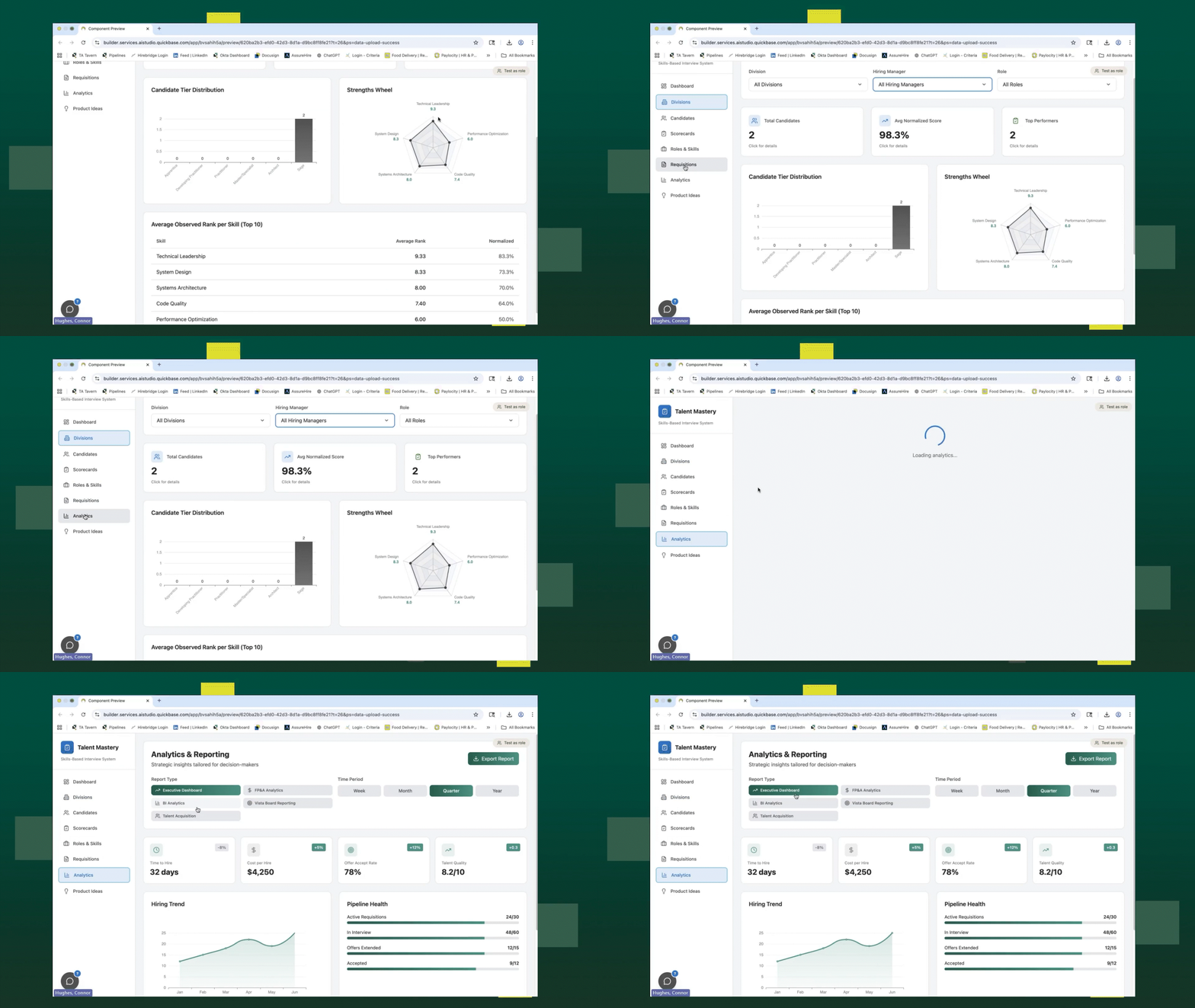
I also rebuilt the dashboard and candidate profile experience around that same idea. Hiring teams could filter by division, hiring manager, and role while getting analytics that historically took a lot of manual work to pull together. It was really a reimagining of a system we'd been using internally for years, but rebuilding it in Pave felt completely different.
Don't think in schemas. Think in workflows.
When I built systems like this before, I would think in terms of structure — tables, fields, how everything connects.
With Pave, I had to get out of that mindset.
At a certain point, I stopped worrying about the structure underneath and just started thinking: what does the user actually need to do here?
That changed the way I built the app. I started describing workflows instead of schemas. I focused more on the experience — what someone clicks, what they see next, how the process should feel. I spent a lot more time customizing the UI with things like dynamic score bubbles, visual workflows, and interactive ranking systems.
"Honestly, having that creative freedom made building a lot more fun."
I had the basic skeleton of the app working in about two hours. After that, it was mostly iteration. I probably spent another 20-30 hours refining workflows, adjusting the UI, testing permissions, and layering on improvements as I went.
I also learned quickly that I tend to write extremely long prompts. I'm just a writer at heart, so I naturally describe the workflow, tone, and experience in detail. Eventually I stopped trying to generate the whole system at once and started breaking the build into smaller pieces, which made the process much easier to manage.
More consistency across interviews
The biggest shift is the consistency it brings to the interview evaluation process. It also completely changes the user experience compared to the older system. The workflows feel cleaner, more interactive, and much easier to engage with.
Even though we're still evaluating where this fits alongside the other tools we use, it's already changed how I think about hiring — mainly around forcing that upfront clarity on skills instead of relying on assumptions later in the process. Because that drives everything else downstream.
The part I'd keep building on is how skills are defined and used across the process, because that still feels like where the most value is.
Pave gives you a solid foundation that you can continue layering on top of as those workflows evolve.
Three things I learned building with Pave
- Think in workflows, not tables. What does the user actually need to do? Start there.
- Keep prompts short. Long prompts are tempting if you're a writer, but short iterative ones work better. (And you won't lose four hours of work when one freezes.)
- Spend time on the UI. That's where the app stops feeling generic and starts feeling like yours.
Try this prompt
Want to build something like this? Try Pave and enter this prompt:
Build out the schema, app name, and custom UI for a fully integrated skills-based hiring and interview evaluation system called Talent Mastery. The app should support end-to-end talent evaluation by syncing requisition, headcount, and candidate data into one centralized workflow. Hiring teams should be able to define role requirements using historical performance-review standards, creating role-specific skill trees that determine what interviewers evaluate candidates against. The backend should support the existing frontend logic and UX without redesigning the scoring model.
The core workflow should follow: Role Skill Tree → Interview Scorecards → Candidate Profiles → Dashboard Aggregation. Key entities include Roles, Skills, Role Skill Trees, Candidates, Scorecards, and Scorecard Items. Interviewers score candidates against defined skill benchmarks using a rank system (1-11), and the system calculates average rank, normalized scores, tier mappings (Apprentice through Sage), and per-skill status indicators (below/on-par/above expectations). Candidate profiles should always reflect the latest non-draft scorecard, while dashboards aggregate insights such as tier distribution, average skill performance, and strengths-wheel visualizations by role.
The system should support APIs for managing roles, skill trees, candidates, scorecards, and dashboard views, along with realtime updates for actions like scorecard saves and skill tree changes. Skill tree versions must be preserved, scorecards should remain immutable for audit purposes, and candidate profiles should be dynamically derived rather than manually edited. Include seed data for roles like Senior SWE and Staff Software Architect, along with example candidates and scorecards demonstrating different evaluation outcomes.
About Pave:
Pave is Quickbase's AI app builder for teams that need to turn ideas into real, usable business apps fast. Unlike prototype-only tools, Pave helps teams create production-ready apps with data, governance, permissions, hosting, and deployment built in. Built on Quickbase's secure infrastructure, Pave gives businesses a more practical, controlled path from experimentation to execution. Start building now at quickbase.com/pave.

Written by:Connor Hughes