Connectors and Workflows: From Building Apps to Running Operations
.png&w=3840&q=75)
Meet Dana. She's the Director of Operations at a 180-person professional services firm, but her real job is holding the whole place together. Every quarter, 25 new clients land and every single one of them passes through her.
She transfers the account from the CRM, picks the lead, tells finance to open billing, and chases the scope doc nobody remembered to attach.
None of it is written down. It runs on her inbox and her memory — and it has for years. She's good at it. Actually, she's great at it. But she's also missed more recitals and dinners than she can count, because the handoff doesn't care what night it is. When a deal closes, nothing moves until Dana moves it. She isn't running the handoff. She is the handoff.
For years, software promised to take much of the process off her plate. But it never did. Mostly it just handed her more tools to manage. Spreadsheets gave her a clean and tidy place to store information, but she still had to do the hard part by hand. Third-party point solutions helped a little but required so much bending to fit her process that they ended up being a waste of time and money. So, Dana kept doing what she's always done: managing everything herself.
Pave is built for people like Dana, the glue that keeps the operation running. It's designed to help you build custom software that connects to the systems you already use and runs the processes you already manage. Two features make it possible, and together they cover the process and the reach that turn a build into an operation.
1. Begin With a Workflow
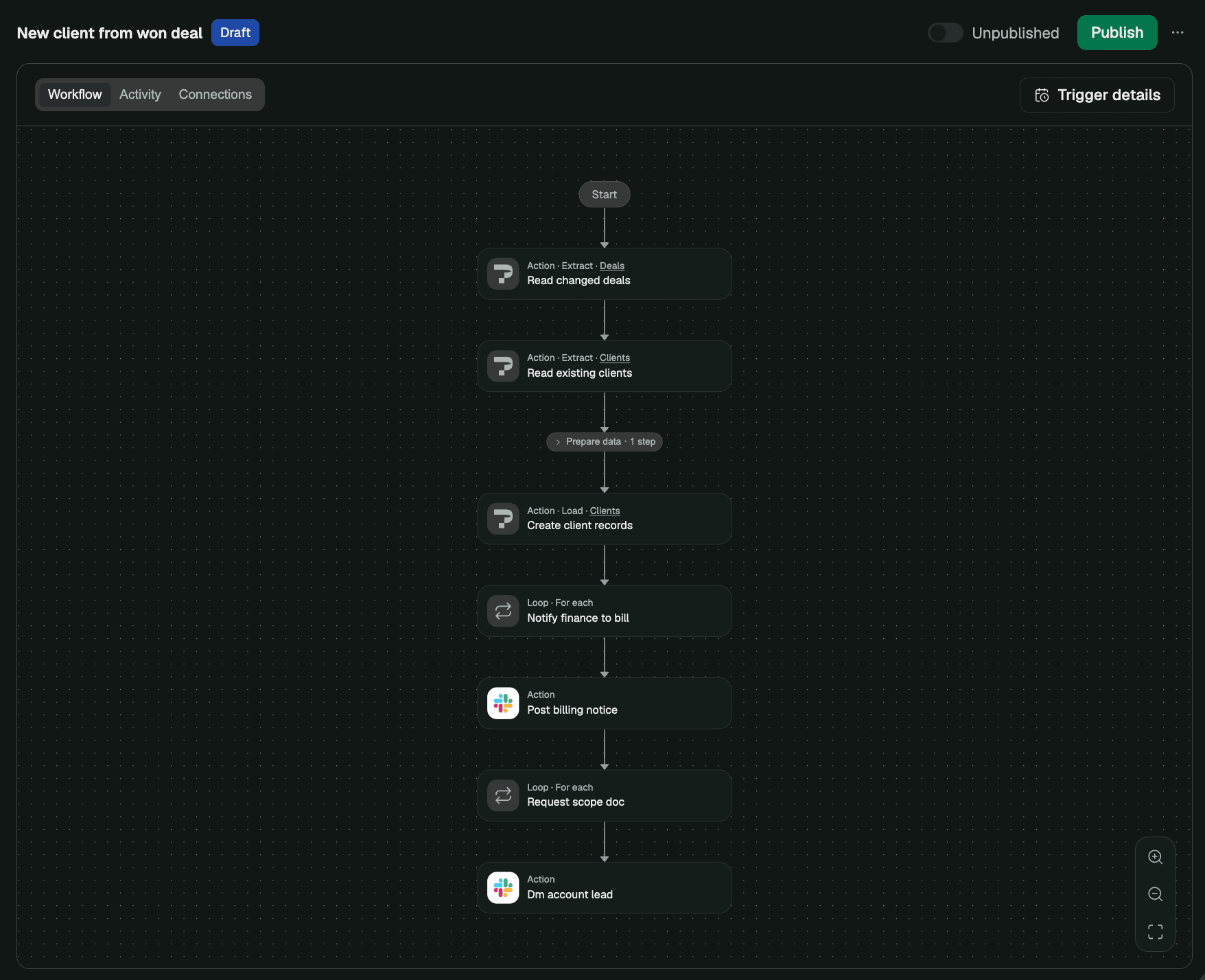
Start with the work that follows the same path every time. Dana describes her process the way she would say it out loud: When a deal closes, create a client record in the CRM, notify finance to start billing, request the scope doc from the account lead, and flag it if it isn't attached within two days.
Pave turns that description into business logic, draws it out on an easy-to-understand canvas, and runs it automatically. She can add a condition, so it only flags a deal above a certain size, branch it down a different path when a scope doc comes back unsigned, or loop it across all 25 new clients in a given quarter. That's a workflow. Once she turns it on, the routing and the follow-ups she used to handle by hand now happen on their own.
2. Add Connectors
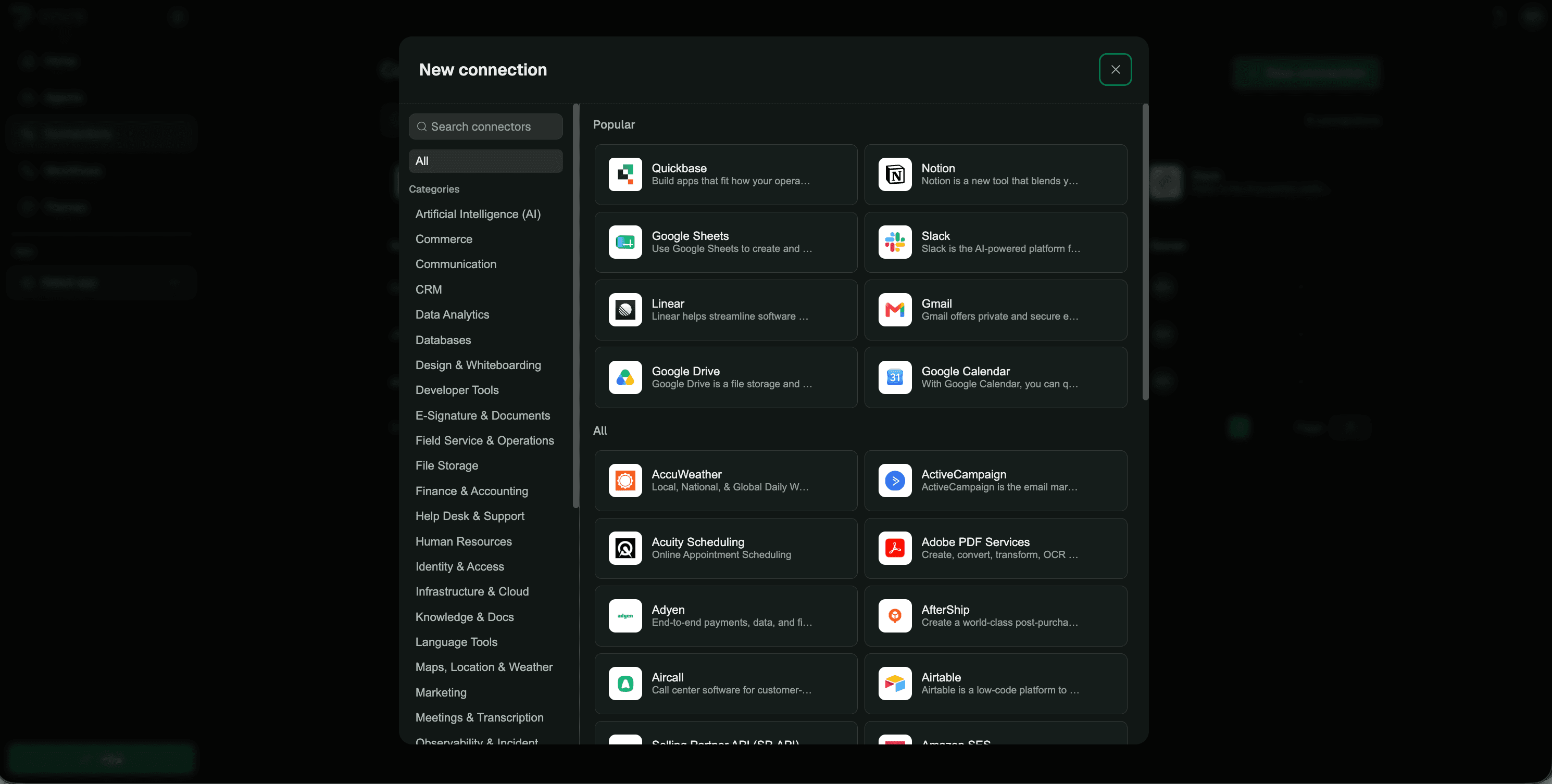
A workflow can only carry the whole handoff if the app can reach past its own walls into the CRM and the accounting system where billing starts. That reach comes from the hundreds of connectors Pave now offers.
Dana sets up each connection once, and from then on, every workflow in her app can read and write across the stack without her wiring anything again. Her data stays safe and operates within limits her IT team is comfortable signing off on. Now, billing opens the moment a deal closes, the scope doc gets flagged the moment it's missing, and the right file lands in the right folder.
Designed for People Closest to the Work
Dana doesn't need to become a developer or even know any code at all. The person closest to the problem has always understood it best, and now she can fix it herself instead of waiting on a queue somewhere. The work that used to live in a dozen open tabs now lives in one place. For the IT director who has to sign off, every connection and workflow is visible and accountable, governed on a 25-year-old platform trusted by thousands of enterprises.
The first wave of AI app builders skipped this part. They proved you could describe a piece of software you want and watch it appear on screen, then hit the harder problem of actually running it. Those tools require coding knowledge, platforms stitched together, and workflows that can introduce data security risks. Pave's unified platform and one-click publish team up with the connectors and workflows needed to build custom apps with the infrastructure, integrations, and automation to scale.
Don't Build an App. Run an Operation.
For years Dana was the glue: the integration between systems and the person everyone asked when they needed to know something. Now, the routing, chasing, and rekeying happen on their own, and her attention goes to the work she was hired to do. Today, Dana stays until the end of recitals and goes out to dinner again. She leads the operation instead of being it.
Get your operations running on Pave.

Written by:Michelle Hendley